Where else can you sip Turkish tea beside a 1,500-year-old Byzantine monument, wander a 65-street labyrinth of shops, and stand before the 86-carat glow of the Spoonmaker’s Diamond?
This is the soul of Istanbul. Here’s your guide to the top 10 must-see sights, complete with practical tips for an unforgettable visit.
Hagia Sophia: A 1,500-Year-Old Marvel

The Hagia Sophia is more than an architectural marvel; it’s a masterpiece of Byzantine architecture and a testament to humanity’s layered history. For nearly 1,500 years, this iconic structure has borne witness to the rise and fall of empires, the clash of religions, and the evolution of cultures.
Inside, echoes of centuries fill the air. The majestic Imperial Gate and its soaring dome captivate at first sight. Then you spot delicate Christian mosaics and Islamic calligraphy standing side by side, telling you a story of faith and time. There is no other landmark in Istanbul that encapsulates the essence of the city quite like this.

Know Before You Visit the Hagia Sophia
- Arrive early to beat the crowds and soak in the peaceful ambiance.
- Keep prayer times in mind; the mosque is still an active place of worship.
- Entrance to the mosque is free but a ticket is needed for access to the upper galleries.
- Blue Mosque, Basilica Cistern, and Topkapı Palace are all within walking distance.
The Blue Mosque: A Masterpiece of Ottoman Artistry

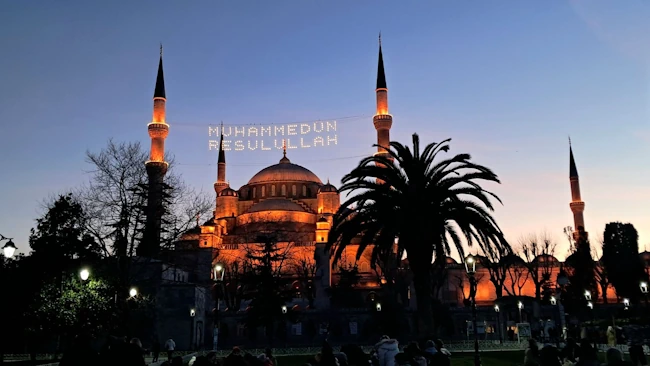
Just a short walk from the Hagia Sophia, the Blue Mosque rises with striking elegance. You will be fascinated by its grandeur – the cascade of domes, the six slender minarets, and the sheer scale of its presence.
Interestingly, this architectural marvel was not commissioned by one of the empire’s legendary rulers. Rather, it was built under the direction of the young Sultan Ahmed I, whose reign faced significant challenges. The construction was a bold move, and its location – directly facing the Hagia Sophia – was a deliberate choice.
Inside, soft light streams through hundreds of stained-glass windows. They cast a gentle glow on blue Iznik tiles that give the mosque its name. Every detail on the walls and ceiling demonstrates craftsmanship and deep devotion.

Know Before You Visit the Blue Mosque
- Entry is free, though expect crowds: This is Istanbul’s most visited mosque by tourists.
- Dress modestly and visit outside of prayer times to fully appreciate the experience.
- Be sure to check for events; the mosque hosts religious celebrations and gatherings.
Topkapı Palace: Political Center, Secretive Harem and Imperial Treasury

Do not leave Istanbul without stepping into the opulent world of the Ottoman sultans at Topkapı Palace. It is a vast complex that served as the heart of the empire for centuries. As you pass through its grand gates, the palace unfolds like a labyrinth, with each courtyard more breathtaking than the last.
The Harem stands out as the most fascinating aspect of the historic site. It offers an exclusive glimpse into the private life of the sultans. Equally interesting is the Imperial Treasury, where you can see the incredible wealth of the Ottoman Empire.
Among the treasures are the legendary Spoonmaker’s Diamond and the emerald-encrusted Topkapı Dagger. These iconic pieces, alongside sacred relics of the Prophet Muhammad, are a direct look at the empire’s immense influence and power.

Know Before You Visit the Topkapı Palace
- Allow 2-3 hours to fully explore the palace and its captivating exhibits.
- For a richer experience, book a guided tour of Topkapı Palace to explore the Ottoman history.
- Purchase tickets in advance to save time, noting that the Harem requires a separate entry.
- Take in breathtaking views of Istanbul, Bosphorus, and Golden Horn from vantage points.
The Basilica Cistern: Istanbul’s “Sunken Palace”

Hidden beneath the lively streets of Istanbul, the Basilica Cistern is another must-see landmark of Istanbul. Built during the Byzantine era as part of Constantinople’s water supply system, it offers a glimpse into ancient infrastructure.
It’s a thrill to explore this ethereal underground marvel, where hundreds of columns create a sea of stone and mythology.
As you step down the staircase, you’re immediately immersed in a haunting, peaceful silence – a stark contrast to Istanbul’s chaos. Soft lights flicker on the water’s surface, while the sound of dripping echoes through the vast space. The mysterious Medusa heads add an eerie touch to this underground world.
Know Before You Visit the Basilica Cistern
- Check the official website for any closures due to special events.
- For a more peaceful visit, consider coming during the off-season.
- The site’s history will deepen your appreciation of its significance.
- Opt for comfortable footwear, as some pathways can be narrow and uneven.
The Grand Bazaar & Spice Bazaar: Historic Markets of Istanbul

The Grand Bazaar and Spice Bazaar are Istanbul’s living marketplaces, where history, sights, and scents collide.
Founded in the 15th century, the Grand Bazaar spans 65 streets and 3,600 shops, forming a vibrant maze of treasures – from antiques and ceramics to handmade textiles. But there’s more: getting lost here reveals hidden courtyards and artisan workshops.
The Spice Bazaar sits just steps away. Built in the 17th century as part of the New Mosque complex, the bazaar enchants visitors with its bustling atmosphere. Its arched hallways are lined with colorful spices, dried fruits, and traditional sweets. Together with the Grand Bazaar, it offers a journey into the city’s lively market culture.

Know Before You Visit of the Bazaars
- Explore Sandal Bedesten for antiques and one-of-a-kind treasures.
- Embrace the art of bargaining – an integral part of the shopping experience.
- Browse luxury boutiques for exquisite jewelry, fine watches, and leather goods.
- Venture beyond the main paths to discover quieter lanes, skilled artisans, and better bargains.
- Sample the small food gifts offered by the shop owners.
Süleymaniye Mosque: Mimar Sinan’s Masterpiece

The Süleymaniye Mosque, commissioned by Suleiman the Magnificent, is a symbol of the Ottoman Empire’s grandeur.
This architectural masterpiece reflects the genius of imperial architect Mimar Sinan. Four towering minarets rise gracefully, while the domes form a harmonious and majestic presence.
Inside, the mosque impresses with its exceptional acoustics, ventilation system, and masterful interplay of light. Perched atop one of Istanbul’s seven hills, Süleymaniye dominates the city’s skyline, offering sweeping views of Istanbul bathed in the golden glow of sunset.

Know Before You Visit the Süleymaniye Mosque
- Take time to explore the mosque’s historic complex.
- Visit early morning or late afternoon to avoid crowds, keeping in mind prayer times.
- Soak in breathtaking views of the Golden Horn and Istanbul’s ever-changing skyline.
Galata Tower: Best Panoramic Views

The Galata Tower rises above the streets of Beyoğlu, standing tall since medieval times. Built in 1348 by the Genoese, it has become an indispensable motif of the city, witnessing Istanbul’s endless transformation.
Reaching the top of the Galata Tower presents a breathtaking 360-degree panorama of Istanbul. The Golden Horn and Bosphorus sparkle, while the minarets of the city’s historic mosques stand tall as reminders of its rich past.
Farther away, the sleek modern skyline of Levent and Maslak contrasts with the timeless charm of the old city and its historic buildings.

Know Before You Visit the Galata Tower
- Arrive early or later in the day to enjoy the small observation deck without the crowds.
- Time your visit to catch the sunset from the top, offering a breathtaking view of the city.
- Wander through the narrow streets of Galata steeped in the history of its Genoese era.
- Explore the iconic Istiklal Avenue, one of Istanbul’s most lively streets.
Istiklal Avenue & Taksim Square: The Heart of Istanbul

Istiklal Avenue stretches nearly 1.4 kilometers and is flanked by the ornate facades of 19th-century apartment buildings. This iconic pedestrian thoroughfare is full of contrasts: chaotic and harmonious, historic and modern, local and global.
At the northern end of the avenue lies Taksim Square, bordered by Gezi Park and the modern Atatürk Cultural Center. For Istanbulites, it remains a symbolic place for celebrations, culture, and public life.
The area is a place where the city’s creativity and dynamism find their fullest expression. During the day, it comes alive with people shopping, exploring art galleries, and visiting museums. As evening falls, Taksim Square and Istiklal Avenue transform into a nightlife hotspot, with crowds gathering at its music venues.
Beyond the crowds and lively storefronts, Istiklal’s side streets reveal a quieter side of the city, where churches, synagogues, and mosques sit side by side – silent witnesses to Istanbul’s cosmopolitan past.

Know Before You Visit the Istiklal Avenue
- Visit in the morning to fully appreciate its historic architecture.
- Return after dark to experience the buzzing nightlife.
- Explore the side streets to get a glimpse of authentic local life.
- Dive into the art scene with a mix of museums, galleries, and cultural spots.
The Bosphorus: Istanbul’s Legendary Waterway

The Bosphorus is the legendary waterway that divides two continents and connects the Black Sea to the Sea of Marmara. For millennia, it has been the lifeblood of Istanbul.
Taking a Bosphorus cruise on these waters is truly a journey into the city’s soul. You’ll pass by layers of architectural history: the stunning Dolmabahçe Palace, the formidable Rumeli Fortress, and the grand suspension bridges that connect Europe and Asia. Each tells its own story of Istanbul’s rich heritage and dynamic future.
Sunset is magical, but evening cruises are equally enchanting. Under the moonlight, the city transforms as its historic palaces and mosques glow against the inky water. It’s a meditation on the breathtaking beauty and timeless complexity of Istanbul.

Know Before You Visit the Bosphorus
- Arrive early to claim the best spots for photos.
- Bring your own snacks and drinks to enjoy along the way.
- Even on cloudy days, the views remain captivating, though less clear.
- Consider booking a private boat tour and savor a magical nighttime Bosphorus cruise.


Leave a Reply