Istanbul’s soul is written not only in its political history but also in its art, its stories, and its stage. While Part 1 explored the women who carved new paths through activism and politics, Part 2 celebrates those who shaped our culture.
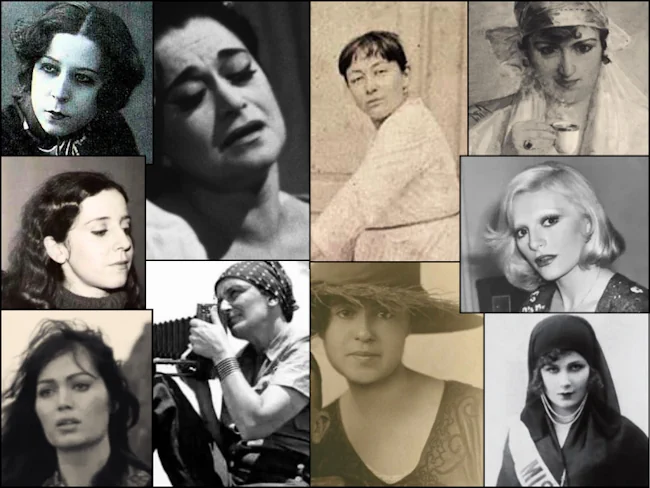
These are the women whose art, literature, stage, and screen left an indelible mark – not just on Istanbul, but on Turkish women and beyond. They are storytellers, performers, creators, and visionaries: icons whose influence resonates across generations.
Fatma Aliye Topuz (1862–1936)
Fatma Aliye is celebrated as the first female novelist of the Ottoman Empire, and a trailblazer whose legacy reshaped the landscape of Turkish women’s history.

She was born into a distinguished family in Istanbul. Her father, Ahmet Cevdet Pasha, was a prominent historian, jurist, and statesman. He is best known for his significant role in the Tanzimat reforms of the Ottoman Empire.
Under his guidance, Fatma Aliye absorbed an environment that prized intellectual and cultural pursuits. She mastered French and Arabic at an early age and delved deeply into philosophy, literature, and political thought.
This rich upbringing gave her the courage to challenge the tradition that confined women to the private sphere. Initially, she began publishing under the pseudonym Bir Hanım (“A Lady”). A bold move from pasha’s daughter at a time when a woman’s name on a book cover could ignite scandal.

Fatma Aliye’s works explored women’s inner worlds, moral dilemmas, emotional landscapes, and struggles for autonomy. Her groundbreaking novel, Muhadarat (“Useful Information”), was a manifesto wrapped in fiction. A critique of patriarchy cloaked in narrative, making it a massive literary success.
Fatma Aliye also championed women’s education. She established charitable foundations and joined public debates on the role of women in Ottoman society. While she may not have called herself a feminist, her questioning spirit and critical perspective placed her far ahead of her time. No doubt!
Mihri Musfik Achba (1886-1954)
Born in 1886 to an Abkhazian princely family in Istanbul, Mihri Müşfik became Turkey’s first academic painter. Her life was a quiet revolution, merging Eastern heritage with Western artistic vision in a time when women rarely stepped into the public sphere.

Her first private lessons were provided by an Italian Orientalist artist, Fausto Zonaro, in his studio in Akaretler, Beşiktas. She later studied in Rome and Paris, walking the same corridors as great European masters. Upon her return, she became the first female instructor at the Academy of Fine Arts for Girls.
Her portraits were intimate and bold, capturing both likeness and spirit. Figures like Pope Benedict XV and POET Tevfik Fikret stood immortalized under her brush. Atatürk’s portrait was a personal gift to the leader himself at the Çankaya Presidential Residence.

She also portrayed anonymous women, but neither idealized nor ornamental. As melancholic, thoughtful, and fierce. Each canvas reflected the changing society and the quiet burden of a generation seeking freedom.
Mihri Müşfik later moved to Europe and the United States. There, she continued to paint, teach, and write. A strange fate for a pioneer — she died in relative obscurity in New York in 1954, her grave unknown.
Sabiha Sertel (1895–1968)
Born in Ottoman Thessaloniki, Sabiha Sertel became Turkey’s first professional female journalist — and one of its fiercest voices for decades. She wielded her pen like a scalpel, exposing the government’s hypocrisies with uncompromising clarity.
After Thessaloniki fell under Greek occupation in 1912, her family moved to Istanbul. Three years later, Sabiha married journalist Mehmet Zekeriya Sertel. Their wedding reflected the political elite of the period: Talat Paşa stood in as her proxy, while Tevfik Rüştü Aras represented her husband.

Resimli Ay (The Illustrated Moon) was the progressive magazine Sabiha Sertel co-directed with her husband. Through its pages, she harged directly into taboo territory — exposing class warfare, demanding gender equality, and defending free speech.
That boldness came at a price. In 1930, her article landed her before a judge, making her the first female journalist in Turkey to be prosecuted for her words. The following year, after continuing to denounce state-sanctioned inequalities, she and her husband Zekeriya Sertel went exile.
In these years, Sertel lived in Paris, Vienna, Budapest, Moscow, and Baku, actively participating in the international work of the Turkish Communist Party. And she continued to give voice to those silenced by Ankara — especially the women whose lives were dismissed as unworthy of record.

The Sertels returned to Turkey in the late 1930s and revived their publishing ventures. But their outspokenness soon collided again with power. In 1945, their newspaper Tan was ransacked by an organized mob. The crackdown and political trials that followed left them battered and silenced.
The Sertels finally left Turkey for good in 1951. Sabiha Sertel spent her years in Paris, Budapest, and Baku. She died in 1968 — far from the city where she had first picked up her pen.
Afife Jale (1902–1941)
Born in 1902 in Kadıköy, Istanbul, Afife Jale became the first Turkish woman to appear on stage — defying law and custom in an era when female performance was forbidden.

In 1918, she joined Darülbedayi (Istanbul City Theatres) as a trainee. The theatre had recently dared to admit Muslim women, challenging centuries of tradition. For Afife, this was the first step toward a dream.
Her defining moment came on Thursday, September 9, 1920, at Kadıköy’s Apollon Theater (today the site of REXX Cinema). She stepped into the role of Emel in Yamalar (“Patches”) by Hüseyin Suat Yalçın — a part once played by a celebrated Armenian actress Eliza Binemeciyan.
The performance electrified the audience. Backstage, Hüseyin Suat Bey kissed her forehead, saying: “Our stage needed a devotee of art. You are that devotee.” This recognition marked the start of a brief and also tragic career.
Her stage work lasted only months. In 1921, pressured by the Ministry of the Interior and Istanbul Municipality, Darülbedayi dismissed her. Her father, Hidayet Bey, never supported her ambitions. She left home.

Afife continued performing under constant threat of arrest. The pressure, coupled with personal hardship, took its toll. She suffered severe headaches, and her doctor turned to morphine — a remedy that led to addiction.
Afife Jale died in 1941 in a psychiatric hospital, alone and far from the footlights she once graced. Yet her courage remains etched in Turkish cultural history. After all, she was the first Turkish woman to claim the stage, and not just for herself, but for generations who would follow.
Semiha Es (1912-2012)
Born in 1912 in Istanbul, Semiha Es grew up in a middle-class family that valued education and discipline. Yet her determination soon set her apart, and that drive would change the course of her life.

At fifteen, she took a job as a switchboard operator to help support her family. There, she met journalist Hikmet Feridun Es, and the two soon eloped. Their union became her entry into the world of journalism.
Her first major journey with her husband took her to the United States in the 1940s. Still inexperienced, she impulsively tried to photograph President Roosevelt. It nearly got her into trouble — yet she captured the shot, proving her instinct and daring.
Her defining moment came in 1950. When the Turkish Brigade joined the Korean War, Hürriyet sent Semiha and her husband to cover the conflict. From the frontlines, her photographs appeared almost daily, confronting readers with the unvarnished face of war.

Semiha worked at the edges of extremes. She documented the horrors of Korea, Vietnam, and the Congo, yet also photographed the world’s most celebrated figures. In every arena, she proved that Turkish women could command both journalism’s highest-profile stories and its most dangerous frontlines.
In 2011, Semiha Es was honored with the Honorary Prize at the Turkish Photography Artist Awards. She passed away the following year at the age of 100 — leaving behind a life framed in both light and shadow, courage and defiance.
Feriha Tevfik Dag (1910–1991)
Feriha Tevfik Dağ was born into an aristocratic Istanbul family. Her grandfather, Mehmet Tevfik Bey, came from the Germiyanoğulları dynasty, a prominent Turkish family that had played a role long before the Ottoman era.

But her name would be remembered not for lineage, but for breaking new ground in the young Turkish Republic. In 1929, she was crowned the first Miss Turkey. The event made headlines and sparked national debates on beauty, modernity, and the role of women.
Also, her victory came with controversy: the initially chosen winner, Hicran Hanım, was disqualified for being recently married, and Feriha herself later admitted she had exaggerated her age to compete.
She returned to the stage in 1932, finishing second to Keriman Halis, the woman who went on to win Miss Universe. By then, Feriha’s fame had already caught the eye of the İpekçi Brothers and director Muhsin Ertuğrul.
They cast her in Kaçakçılar (The Smugglers), making her Turkey’s first film star. In her movies, she also sang, embodying the Republic’s fascination with a new kind of modern woman: bold, visible, and unapologetically present.

A Muslim woman from Istanbul appearing on screen in the early 1930s — both scandalous and symbolic. By the end of the decade, she had withdrawn from the spotlight. In one of her last interviews, she said that she was tired and hurt — words that carried the weight of her era’s contradictions.
Leyla Gencer (1928–2008)
Born in Polonezköy, a Polish village near Istanbul, Leyla Gencer was the daughter of a Turkish Muslim father and a Polish Catholic mother. She rose from a country without an established opera tradition to claim a place among the world’s great sopranos — earning the title La Diva Turca.

Her early talent was nurtured in Istanbul by masters like Cemal Reşit Rey and Muhittin Sadak. She then refined her artistry in Italy under masters like the renowned soprano Giannina Arangi-Lombardi. Her voice, described as both powerful and delicate, captivated masters and audiences alike.
After her 1953 debut in Naples, the true breakthrough came four years later at Milan’s legendary La Scala Theater (Theatro alla Scala). There, she stunned audiences as Lidoine in the world premiere of Francis Poulenc’s Dialogues des Carmélites, launching her to stardom.

Her career lasted for decades. She was most famous for singing Donizetti and Rossini. Her voice was so perfect for this music that it started a “Donizetti Renaissance,” and she was its biggest star.
Though she passed away in Italy, far from her home city, Leyla Gencer’s heart never left Istanbul. Honoring her final wish, the pianist Fazıl Say scattered her ashes upon the waters of the Bosphorus, allowing her to return home forever.
Tomris Uyar (1941–2003)
Born in Istanbul in 1941, Tomris Uyar grew up in a world of privilege. Yet she turned away from comfort and tradition, choosing instead a life devoted entirely to words. Writing became her rebellion, her voice, her home.

Tomris Uyar moved within the heart of Turkey’s literary revolution, closely connected to the poets of the Second New Movement — Ülkü Tamer, Cemal Süreya, and Edip Cansever. With them, her personal life became as intense and poetic as her writing.
She married poet Ülkü Tamer, a union she later described as one of the greatest traumas of her life. While still married, she embarked on a famously turbulent affair with Cemal Süreya, whom she would later call “the mistake of loving.”
Her final marriage was to poet Turgut Uyar — a partnership that would leave a lasting mark on both their lives. For Turgut, she became a profound muse; one of his most unforgettable lines, “My heart is a broken clock — it always stops on you,” was written with her in mind.

But Tomris Uyar’s legacy lies in her own words. Nine hundred pages of short stories stand as a testament to her mastery. She was also a prolific translator, bringing over sixty works into Turkish, including those of Edgar Allan Poe, Jorge Luis Borges, and Gabriel García Márquez.
Tomris Uyar secured her place among the great voices of modern Turkish literature. Beyond that, avant-garde and deeply intimate, her legacy remains a quiet revolution in Turkish cultural history, inspiring women from all walks of life.
Turkan soray (1945-)
Born in Eyüp, Istanbul, Türkan Şoray grew up in a modest family — far from the glittering world that would one day hail her as “Sultan.” Her story mirrors the evolution of Turkish cinema itself: a journey of resilience, reinvention, and quiet resolve.

Discovered by chance at fifteen while visiting a film set with a neighbor, Türkan Şoray entered cinema unobtrusively, yet her presence soon became undeniable. From the 1960s onward, she appeared in over 222 films — more than any other female actor worldwide.
She inhabited women from every walk of life: the village girl, the migrant, the working mother, the urban dreamer. In each role, she gave voice to those rarely heard, revealing their inner worlds with rare compassion.
This lifelong project found its ultimate expression in Selvi Boylum Al Yazmalım. The film became a landmark because her performance distilled the essence of Turkish womanhood and explored the deep contradictions of love and sacrifice in Turkish culture. It forever defined her in the cultural memory.
Off-screen, her quiet revolution unfolded as she set firm boundaries around intimacy, scripts, and wardrobe. In a male-dominated industry, these rules became both armor and assertion. The statement was clear: a woman could control her image and command public devotion.

In later years, she embraced directing and writing. Her memoir, Türkan and Life, offers candid reflections on beauty, trust, and the unseen truths of her journey, revealing the woman behind the “Sultan of Turkish Cinema.”
Türkan Şoray lived a life that was both art and assertion. Her importance lies, perhaps, in proving that elegance and resistance are not contradictions. They are intertwined truths, enduring and unyielding.
Ajda Pekkan (1946-)
Born in Istanbul in 1946, Ajda Pekkan grew up in a disciplined household shaped by her father’s naval career. Her childhood was marked by upheaval when her parents divorced, leaving her with a deep sense of loss. She filled that emptiness with music, turning to it as both refuge and purpose.

Her professional breakthrough came in 1961 as the soloist for the prestigious İlham Gencer Orchestra, a leading ensemble blending jazz and popular music. This experience honed a unique and confident stage presence, which propelled her to first place in a 1963 Ses magazine competition. This victory in music also launched her film career.
Her cinema career quickly flourished, making her one of Yeşilçam’s rising stars. But her heart remained in music. For her, acting was a means to earn and gain experience while preparing for her true passion. On set, her mind often wandered toward music, longing for moments away from scripts and bright cameras.
That passion found form in 1964 with her debut album Ajda Pekkan. The record instantly established her voice in Turkey—bold, self-defined, and unapologetically iconic. She was ready not only to transform music but also to redefine the image of womanhood in Turkey.

Ajda Pekkan’s stage persona — glamorous, commanding, and enigmatic — defied expectations. “She opened the way,” Sezen Aksu once said, and indeed, she did. She created opportunities for generations of artists to follow, giving them permission to sing louder and stand taller.
Now, at nearly 80, she still surprises and inspires. Her music refuses to age, continuing to circulate and remain widely known across generations. She rocks bikinis, commands the stage, and sings with the same energy that made her a legend. It’s astonishing how Ajda Pekkan keeps rewriting her own story.
Leave a Reply