“How does money work in Istanbul?” This is one of the first questions many travelers ask before arriving. While card payments are widely accepted and ATMs are easy to find, cash still plays a vital role in the city’s daily life. Knowing when you’ll need Turkish Lira and when you can simply tap your card helps you navigate daily transactions with ease.
This guide provides a clear roadmap for your 2026 trip. It covers everything from currency basics to digital payments, leaving you free to focus on the sights and flavors of the city.
Currency Overview

Turkey uses the Turkish Lira (₺, TRY). While some businesses in tourist-heavy areas may accept foreign currency, the Turkish Lira is the standard for everyday payments and almost always offers better value. Foreign currency should be treated as a backup or exchange option rather than something you’ll use for daily spending.
Turkey has experienced high inflation in recent years, which means prices change frequently. For this reason, older guidebooks, blogs, or forum posts may show amounts that are no longer accurate. When traveling, rely on current menu prices, ticket counters, and official apps rather than pre-trip estimates.
Cash and Currency Exchange (Döviz)

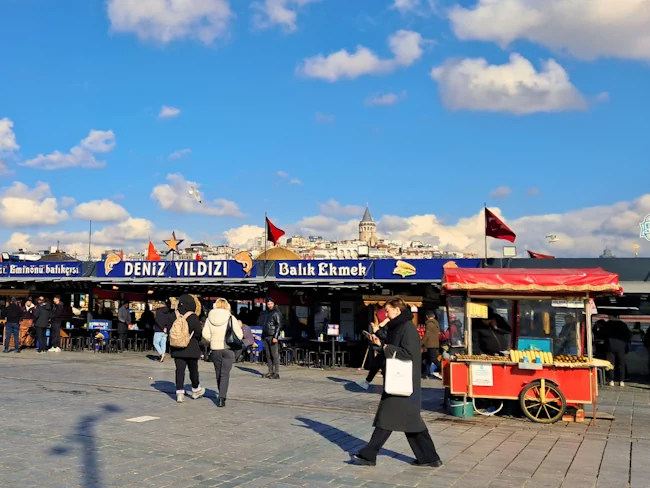
Istanbul is largely card-friendly, but cash remains essential for navigating the city’s authentic side. While you can tap your card in most shops and restaurants, you will need Turkish Lira for taxis, street vendors, and small neighborhood eateries. While you can pay for public transport with a contactless credit card, using a cash-topped Istanbulkart is still the cheapest way to travel.
For currency exchange, look for local offices known as döviz. These are common throughout the city and typically offer much better rates than airports or hotels. You don’t need to exchange your entire budget at once; Istanbul’s density of exchange offices and ATMs makes it easy to manage your cash as you go.
The Golden Rule: Always Pay in Turkish Lira
- In Shops and Restaurants: If a business offers to take your USD or EUR directly, politely decline. They usually apply a “convenience” exchange rate that is far worse than the official rate.
- At Card Terminals: When you tap your card, the screen may ask if you want to be charged in your home currency or TRY. Always select TRY. Choosing your home currency triggers “Dynamic Currency Conversion,” which often adds 5–10% in hidden fees.
Cards & Digital Payments

Visa and Mastercard are widely accepted across Istanbul, with contactless payments being the standard in most urban areas. Because of this high reliability, the limit for PIN-free transactions was raised to 2,500 TL in 2026. This makes it easier to handle most daily expenses with a simple tap.
Debit cards work well for both payments and ATM withdrawals, though international transaction fees depend on your home bank. It’s a good idea to bring a primary and a backup card from different accounts. This way, you’ll still have access to funds if your main card is lost, stolen, or blocked.
Digital wallets such as Apple Pay and Google Wallet function in some locations, but adoption is still inconsistent, so they should not be your only payment method. PayPal does not operate in Turkey and should not be relied on during your trip. Overall, paying by card in Istanbul is safe and convenient, but keeping some cash as a backup is ideal for street food, local markets, taxis, and tipping.
ATMs & Bank Partnerships

ATMs are easy to find throughout Istanbul, including at airports, along shopping streets, and near metro stations. Machines operated by major Turkish banks – such as Ziraat Bankası, İş Bankası, and VakıfBank – tend to be the most reliable for foreign cards.
Withdrawal limits and fees vary by bank. Some ATMs have relatively low limits per transaction, which may require you to make multiple withdrawals for larger amounts. Most machines will display fee information on the screen before you confirm the transaction, so you can cancel if the charges are too high.
Before you travel, check if your home bank has a partnership with a Turkish bank, as this may allow you to benefit from reduced or waived fees.
The most important rule when withdrawing cash is to always decline any offer to convert the amount into your home currency. If the screen gives you a choice, select options such as “Continue without conversion” or “Charge in TRY.” This avoids “Dynamic Currency Conversion,” which typically uses a poor exchange rate and adds unnecessary costs to your withdrawal.
A Note on Tipping (Bahşiş)

Tipping in Istanbul is common for good service, but it is not strictly required. In restaurants, leaving around 10–15% is typical.
As of early 2026, the Turkish Ministry of Trade has officially banned mandatory service charges, table fees, and cover charges (kuver). Always check your receipt for these banned extras. If they appear on your bill, you are not legally required to pay them.
For porters, taxi drivers (by rounding up the fare), and tour guides, small cash amounts are appreciated. Tip in Turkish Lira rather than foreign currency. Local staff cannot easily exchange foreign coins.
A Simple Money Strategy for First-Time Visitors

For a short stay in Istanbul, simplicity works best. Use your card for most purchases and keep a reasonable amount of cash in Turkish Lira for smaller payments. When you need more cash, rely on local ATMs or döviz offices rather than exchanging large sums all at once.
When paying by card, always pay attention to currency prompts and choose Turkish Lira. This helps you avoid extra conversion fees and inflated totals.
Instead of over-planning around exact costs, use price tiers to estimate your daily spending and cash needs. A street-vendor tea represents an entry-level expense, while a neighborhood kebab plate falls into the mid-tier range. For a high-tier experience, look toward restaurant meals with a Bosphorus view.
Istanbul’s payment systems are flexible. With a basic understanding of how money flows in the city, handling your daily expenses will quickly become routine.
Your Final Checklist Before You Travel
- Download your bank’s app: Essential for monitoring your balance and freezing your card instantly if it’s lost or stolen.
- Verify bank partnerships: Check if your home bank has a “Global ATM Alliance” or similar partnership with Turkish banks (like İş Bankası or TEB) to help you avoid extra fees.
- Bring a primary and a backup card: Ideally, use two different accounts. If one card is flagged for security or swallowed by an ATM, you won’t be stranded without funds.
- Carry a “Hidden” Cash Reserve: Keep around €100 or $100 in a separate spot (not your wallet) as an emergency backup. This amount provides a safer cushion for an unexpected taxi ride or a night’s stay if your cards fail.


Leave a Reply