Some of Istanbul schools stand as bold markers of the city’s architectural and cultural identity.
A few sit on the Bosphorus waterfront, their walls steeped in stories you won’t find in guidebooks. Some shaped minds that would one day reshape Turkey—writers, thinkers, revolutionaries. Others reveal the city’s complex cultural fabric through their architecture and history.
This article isn’t a tour of Istanbul schools. It’s a look at the institutions that helped build Istanbul itself.
Phanar Greek Orthodox College
The Phanar Greek Orthodox College is Istanbul’s oldest school. Located in the historic Fener neighborhood, it overlooks the Golden Horn, It has been operating since 1454, just a year after the city fell to the Ottomans.
Patriarch Gennadius Scholarius founded this school. It grew into a vital center for Orthodox Christian education and attracted notable students including the Moldavian Prince Dimitrie Cantemir.

The current building you see today was completed between 1881 and 1883. Architect Konstantinos Dimadis designed it, and banker Georgios Zariphis funded the project.
Its eclectic style features neo-Byzantine touches. Known as the “Red Castle,” it earned its name from its fortress-like look and bricks – imported from Marseille.
Today, the school remains active and provides a bilingual curriculum in Turkish and Greek.
It serves the Greek Orthodox community in Istanbul and beyond, upholding a centuries-old legacy of education and culture.
Galatasaray High School
Galatasaray Imperial School has a long history. It stands as Istanbul’s second oldest educational institution after the Phanar Greek Orthodox College.
Sultan Bayezid II founded it in 1481 at the request of a dervish known as “Rose Father.” Originally a palace school for the sons of Ottoman elites, the institution quickly became a powerhouse in shaping the city’s intellectual life.
By the 19th century, Galatasaray had evolved beyond its palace origins, adopting French-language instruction and modern curricula. Graduates went on to occupy influential roles across the empire’s political, social, and cultural spheres.
They sparked reforms, ignited revolutions, and helped rewrite the fate of Ottoman and Turkish history.

Today, the school’s neoclassical building in Beyoğlu stands as a testament to this rich history. Nestled on Istiklal Avenue, its massive green iron gate commands attention. Think of it as a proud emblem of imperial prestige amidst the city’s lively and modern energy.
Saint-Benoit French High School
The Saint-Benoit is a masterpiece of 19th-century French architecture. Its cloisters, wrought-iron balconies, and tranquil inner courtyards balance monastic calm with urban elegance.
Founded in 1783 by the Lazarist Fathers, Saint-Benoît is one of Istanbul’s oldest Western educational institutions, though Jesuit educators had already established a school on the site as early as 1583.
From the start, it served the city’s Christian minority with a mission that blended faith and learning.

In 1839, Saint-Benoît opened one of Istanbul’s earliest girls’ sections, reflecting its progressive educational vision.
Over time, it welcomed students of all faiths and backgrounds, nurturing generations who helped shape Istanbul’s multicultural, modern identity.
Today, Saint-Benoît remains a respected bilingual institution within the French National Education system, quietly shaping minds in the heart of Istanbul.
Kuleli Military High School
The Kuleli Military High School was once one of Turkey’s oldest and most prestigious military academies. But after the 2016 coup attempt, the school was formally closed. Now it stands quietly on the Asian shore of the Bosphorus in Çengelköy.
Kuleli was founded in 1845 during Sultan Abdülmecid’s Tanzimat reforms. It was part of a broader push to modernize the Ottoman military.
Armenian architect Garabed Amira Balyan designed this waterfront campus, blending Ottoman style with Western neoclassical elements. At its core stood the iconic watchtowers that gave the school its name.

For more than a century, Kuleli trained generations of cadets in military science and academic rigor.
Its alumni fought in nearly every major conflict of the late Ottoman and early Republican eras, including the Balkan Wars (1912-13) and the Turkish War of Independence (1919-1923).
Lycée Notre Dame de Sion Istanbul
The French Sisters of Sion established Lycée Notre Dame de Sion in 1856 in Harbiye. It was the first school for girls in the Ottoman Empire.
It began as a boarding school for Christian students but soon welcomed Jewish and Muslim girls. For 140 years, it remained exclusively for girls – until opening its doors to all in 1996.
Its historic campus sits beside the Baroque-style Holy Spirit Cathedral. The cathedral’s presence adds a layer of architectural and cultural depth rarely found in Istanbul’s educational landscape.
It was completed in 1846 by Giuseppe Fossati and Achille Bottazzi. They were the architects who also restored the Hagia Sophia.

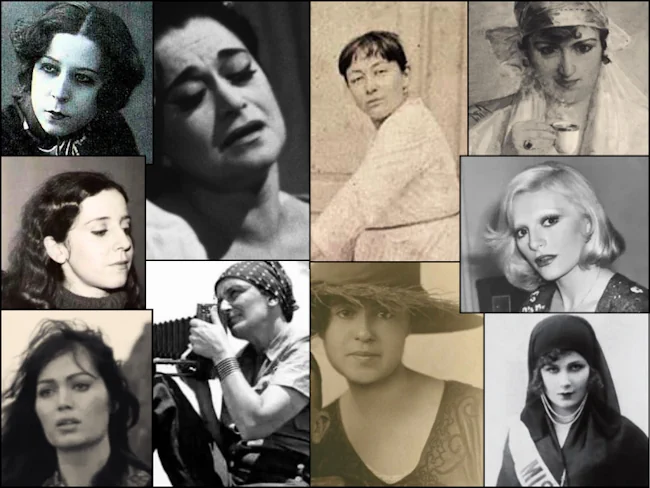
This legacy of inclusion and excellence is reflected in its alumni. Historian and Atatürk’s adoptive daughter Afet İnan, ceramic artist Füreya Koral, businesswoman Matild Manukyan, and Princess Fahrelnissa Zeid—all left bold marks on Turkish cultural life.
Robert College
The Robert College holds the honor of being the first American school established outside the U.S. It was founded in 1863 by missionary Cyrus Hamlin and philanthropist Christopher Rhinelander Robert.
Its location was perfect: high above the Bosphorus in Arnavutköy, between Kurucesme and Bebek.
From its inception, it was an ambitious undertaking. It chanelled the daring spirit of 19th-century Americanism. Over the decades, it rose to become Turkey’s most prestigious high school.
Its alumni list says it all: President Turgut Özal, Prime Minister Bülent Ecevit, Nobel laureate Orhan Pamuk, and feminist writer and politician Halide Edip Adıvar, all walked these halls.

Originally both a high school and a college, the institution split in 1971. The university division became Boğaziçi University, while the high school continued as Robert College.
Deutsche Schule Istanbul
The history of the Deutsche Schule Istanbul dates back to 1868. However, after the 1894 earthquake severely damaged the school building, it moved in 1897 to its current location, near the Galata Mawlawi House and Galata Tower.
August Jasmund, the renowned architect behind Sirkeci Train Station, earned the Order of the Medjidie for his contributions to Istanbul’s skyline. He also designed the school’s striking new building.
The project was financially supported by Otto Kapp von Gültstein, a key figure in the Baghdad Railway’s construction.

Progressive for its time, Deutsche Schule Istanbul welcomed both boys and girls from the beginning, reflecting a forward-thinking approach to education.
Some of Turkey’s most important names have walked the school’s halls; Reşad Ekrem Koçu, the historian behind the monumental yet unfinished İstanbul Ansiklopedisi; Erkin Koray, a pioneer of Anatolian rock music; and Cem Uzan, a prominent businessman and politician.
Lycée Saint-Joseph Istanbul
Founded in 1870 by French Lazarist missionaries (Congregation of the Mission), Lycée Saint-Joseph Istanbul stands on a 32,000 m² campus in Kadıköy.
One of its most striking architectural landmarks is the Caporal House, built in 1885—a symbol of the school’s deep-rooted heritage.
In the multicultural heart of late Ottoman Istanbul, the school quickly rose to prominence. Its French-language education and secular approach set it apart as a distinctly modern institution for its time.

One remarkable chapter in its history is its connection to Fenerbahçe S.K., one of Turkey’s most iconic sports clubs. The club was founded by a group of Saint-Joseph students, including Ziya Songülen, Necip Okaner, and Şevkipaşazade Ayetullah.
Beşiktaş Anatolian High School
This might be the only high school in the world where the canteen was once a sultan’s prison: Welcome to Beşiktaş Anatolian High School, one of Istanbul’s most storied schools.
Set just steps from the Bosphorus shoreline, the school sits inside a 19th-century imperial structure. It was built in 1871 by famed Ottoman-Armenian architect Sarkis Balyan.
The building was part of the Çırağan Palace complex – a lavish ensemble of marble-clad pavilions and waterfront gardens – reflecting Sultan Abdülaziz’s grand taste.

The school building was originally designed as the harem annex, but fate had other plans: when Sultan Murad V was deposed after just 93 days on the throne, this became his gilded cage. He spent 28 years here under confinement.
Today, that same room is where students grab lunch.
Beşiktaş Anadolu Lisesi stands as one of Istanbul’s respected public high schools. Classes are conducted in Turkish, with English and German taught as foreign languages.
The school has produced many accomplished alumni, especially in sports. Numerous professional athletes once trained and studied within its historic walls.
Vefa High School
Located next to Mimar Sinan’s Şehzade Mosque, Vefa High School was founded in 1872. It holds the distinction of being the first civil high school in Istanbul to offer education in Turkish. It marked a major step in the modernization of the Ottoman education system.
The school’s main building is a 19th-century mansion. It was once owned by Grand Vizier Mütercim Rüştü Pasha, a remarkable man who rose to the grand vizierate from humble beginnings.
Across the courtyard stands the Girls’ Dormitory. Designed in 1938 by the renowned architect Mimar Kemalettin, it brings grace and architectural beauty to the campus.

Inside those walls, generations of Turkish culture-makers found their voice. Alumni include literary giants Yahya Kemal Beyatlı and Ahmet Hamdi Tanpınar, the legendary composer Cemal Reşit Rey, the iconic comedian Kemal Sunal, and the renowned geologist Celal Şengör.
Vefa High School is tightly bound to Vefa S.K., one of Istanbul’s historic football clubs. And just a few steps from the campus gates lies the iconic Vefa Bozacısı, where generations of students and locals have gathered for a glass of Istanbul’s favorite winter drink.
Istanbul High School
The Istanbul High School is one of Turkey’s oldest and most respected educational institutions.
It was founded in the historic heart of Fatih in 1884. Since 1914, it holds the rare distinction of being a “Deutsche Auslandsschule” – a German international school abroad.
German and Turkish educators teach side by side, and students graduate with both a Turkish diploma and the Abitur.
The school’s striking main building was constructed in 1882. Its designers were the era’s well known architects Alexander Vallaury and Raimondo D’Aronco. The building originally housed the Ottoman Public Debt Administration (Düyun-u Umumiye).
Since 1933, the building has served as the school’s home. It is a rare neo-Gothic landmark with sweeping views of both the Bosphorus and the Golden Horn.

Of course the school is far more than an architectural gem. Few schools can claim to have shaped the country’s top minds with such consistency as Istanbul High School.
Its alumni list includes Prime Ministers Mesut Yılmaz, Necmettin Erbakan, and Ahmet Davutoğlu, alongside influential historian Fuat Köprülü and business titan Murat Ülker.
Halki Theological School
Halki Seminary crowns the Hill of Hope (Umut Tepesi), the highest point on Heybeliada. From here, it overlooks the Sea of Marmara with Istanbul’s skyline shimmering in the distance.
Established in 1844 on a former Byzantine monastery, it became the principal theological school of the Ecumenical Patriarchate and a spiritual powerhouse for the Eastern Orthodox Church.
For nearly a century, the school educated generations of Orthodox clergy and thinkers, producing 990 graduates, including seven patriarchs, seven archbishops, and six metropolitans.
After the 1894 earthquake, the Greek architect Periklis Fotiadis redesigned the complex completing restorations in 1896. At its heart stands the Chapel of the Holy Trinity, surrounded by buildings that blend Byzantine elegance with neoclassical precision.

Its doors closed in 1971 after changes to Turkish law required all private higher education institutions to come under state control. As the seminary refused to compromise its autonomy, it was forced to shut down.
Today, visitors can walk the same halls, explore the seminary’s monastic garden, and browse its library of over 120,000 volumes.
The garden, called the ‘Trail of Virtues’, holds 14 symbolic plants. Among them are phoenix dactylifera for justice, vitis vinifera for calmness, and smilax aspera for knowledge.
Lycée Français Saint-Michel
Another esteemed French school in Istanbul is the Lycée Français Saint-Michel. In was founded in 1886 by the Frères des Écoles Chrétiennes, a congregation of French Catholic brothers.
The school began on Ağa Hamam Street in Beyoğlu, with just 25 students. It later merged with Jeanne d’Arc College and relocated to its current campus on Valikonağı Street near the Osmanbey metro station.
The school building is an architectural gem. It blends Neoclassical and Belle Époque styles. Its façades, rich with ornament, echo the grandeur of Europe’s great educational institutions of the era.

In the 1970s, the school became co-educational. Graduates earn the French Baccalauréat. This is a diploma that opens doors to universities in France, across Europe, and in North America.
The school’s alumni include notable figures such as actress Oya Aydoğan, journalist Leyla İpekçi, businessman İshak Alaton, and businesswoman Arzuhan Doğan Yalçındağ.
Getronagan Armenian High School
Founded in 1886, Getronagan Armenian High School is one of Istanbul’s oldest and most prestigious Armenian schools.
It is located in Karaköy, next to Saint Gregory the Illuminator Church. This is one of Istanbul’s oldest churches, originally built in 1391.

The school was established with the support of Archbishop Nerses Varjabetyan. It was later guided for a time by the writer and intellectual Minas Çeraz.
Through its teaching and community, Getronagan emerged as a cornerstone for preserving Armenian language, literature, and identity in a rapidly changing Istanbul.
Its alumni include some of the most prominent names in Armenian and Turkish history. Among them are linguist Hrachya Acharyan, poet Misak Metsarents, photographer Ara Güler, musician Hayko Cepkin, and Soghomon Tehlirian, who assassinated Talat Pasha in Berlin.
Italian High School
Istanbul Italian High School (Liceo Italiano di Istanbul) was established in 1888 to meet the educational needs of Istanbul’s expanding Italian community.
It is situated on Tomtom Street in Beyoğlu, just steps from the Italian Consulate and the historic Galata Tower.
The school occupies a striking five-story neoclassical building that embodies the elegance of 19th-century Italian architecture.
The school building surrounds a peaceful, tree-shaded courtyard, offering a rare open-air refuge for students in bustling Taksim.

Over the years, the school has nurtured a unique cultural blend, reflected in its alumni. The list includes celebrated Turkish actors and artists such as Mehmet Günsür, Can Yaman, Hazal Kaya, and Ayşecan Tatari.
Zografeion Lyceum
Zografeion Greek High School is one of the last remaining Greek educational institutions in Istanbul. It is a proud sentinel of Hellenic culture, history, and resilience.
Opened in 1893, the school was named after its benefactor, Christakis Zografos. He was a wealthy banker, but more importantly, a philanthropist who dedicated himself to the educational needs of the Greek Orthodox community.

The school building is tucked away on a quiet side street, just off Istiklal Avenue. It sits behind high stone walls and an ornate iron gate. The marble plaque at the entrance still bears the name of its founder in Greek script.
Its architecture reflects a restrained neoclassical style, with clean lines and a symmetrical façade.
Notable alumni include Patriarch Bartholomew I, the current Ecumenical Patriarch of Constantinople. Many others—academics, lawyers, and artists—have shaped the cultural life of Turkey and the global Greek diaspora.
Esayan Armenian School
Another prominent Armenian institution is the Esayan Armenian School (Esayan Ermeni Okulu). It is located on Meşelik Street in the heart of Beyoğlu, just steps from Taksim Square.
The school was founded in 1895 through the support of Mıgırdiç Esayan and his brother Hovannes Esayan.

Throughout its history, Esayan has continuously adapted to serve its community’s needs.
During World War I, the school building was repurposed as a hospital for nurses. In 1921, it became home to Turkey’s first school laboratory, and the following year, part of the campus operated as an orphanage.
After renovations, Esayan School reopened in 1923 and has since been a vital center for Armenian education and culture.
The school’s architecture reflects the neoclassical tastes of its time. Tall arched windows, a symmetrical façade, and ornate stonework lend the building a dignified presence.
Inside, a central courtyard offers a calm retreat in the heart of Beyoğlu’s urban bustle.
Kabataş Boys High School
Few schools in the world can boast a setting as breathtaking as this one.
The Bosphorus shimmers just beyond the windows, the Ortaköy Mosque stands majestically next door, and the Bosphorus Bridge strecthes across the skyline.
However, the location is only part of the story. This school occupies one of the former Feriye Palaces, 19th-century waterfront residences for the Ottoman royal family. Its halls hold many intriguing stories.
Most notably, the principal’s office was once the room where Sultan Abdülaziz was found dead on June 4, 1876, His wrists were cut, under circumstances that remain suspicious.
Just four days earlier, he had been deposed by a coup and taken to Topkapı Palace. Unhappy with the conditions there, he was transferred to the Feriye Palace.
His sudden death in that building remains one of the most unsettling episodes of Turkish history.

What truly gave the school its character were the minds who taught within its walls. Nihal Atsız, Faruk Nafiz Çamlıbel, Reşat Nuri Güntekin, Fuat Köprülü, and Ömer Seyfettin stood at the blackboard here. They shaped Turkish intellectual and political life.
Its alumni, no less remarkable, carried that legacy forward. Students like poet Özdemir Asaf, journalist Hakkı Devrim, writers İlhan Geçer, Cezmi Ersöz, Behçet Necatigil, and the enigmatic Süleyman Seba graduated well-educated and ready to make a difference.
Çamlıca Girls’ High School
Founded in 1913, Çamlıca Girls’ High School holds a distinguished place in the history of women’s education in Turkey.
Set on the forested slopes of Çamlıca Hill, the school occupies the Ahmet Ratip Paşa Mansion. This grand 54-room summer residence was designed by the renowned architect Mimar Kemaleddin.
Ahmet Ratip Pasha, once governor of Hejaz and among the wealthiest men of his era, never had the chance to enjoy this structure.
Shortly after the mansion was completed, Sultan Abdülhamid II was deposed in 1909. As a close ally of the sultan, Ratip Pasha was arrested, and his properties were seized by the state.

The building soon found a new purpose. It housed one of the first boarding schools for girls Turkey, thus becoming a key institution during the republic’s formative years.
Many of its students went on to become influential teachers, writers, and professionals. These pioneering Turkish women redefined the place of women in public and intellectual life.
Macka Vocational and Technical Anatolian High School
The Maçka Vocational and Technical Anatolian High School (Maçka Mesleki ve Teknik Anadolu Lisesi) occupies a building with a unique past.
The Italian government originally commissioned the building before World War I as a winter embassy in Istanbul. However, the construction stopped due to the war, leaving the structure incomplete for decades.

Giulio Mongeri, a prominent Italian architect who shaped many of Istanbul’s iconic buildings, designed this structure. Therefore, it reflects sophisticated Italian architectural influences.
In 1957, after serving briefly as the Tophane Boys’ Art Institute (founded in 1945 to train skilled tradesmen), the school was relocated to this historic site. Since then, it has stood as a center of education and creativity in the heart of Istanbul.
Leave a Reply