What are the best neighborhoods to visit in Istanbul? It’s a question every traveler asks, and with good reason.
Istanbul spans two continents, carries millennia of history, and bursts with cultural diversity. The neighborhoods you explore decide everything. But before we dive in, it’s worth clearing up a common source of confusion for first-time visitors.
Districts vs. Neighborhoods
Most travel articles – even big-name ones – toss around words like “district,” “neighborhood,” and “area” interchangeably.
However, in a city this vast, that confusion isn’t trivial. It’s the difference between wandering aimlessly and exploring with purpose. Even worse, it can leave you frustrated, exhausted, and wondering why the “trendy” spot you booked a hotel for feels completely out of reach.
Say you book a hotel in Beyoğlu because a guide calls it “ central and lively.” Instead, you find yourself trapped on a noisy highway, 40 minutes from the cobblestone streets you actually wanted to wander.

Istanbul can feel like a maze, but knowing how the city is organized makes all the difference.
- Istanbul is divided into 39 official districts (ilçe).
- Each district has its own local government and covers a mix of residential, commercial, and historic neighborhoods (mahalle).
- Istanbul has over 900 neighborhoods, from historic villages to modern high-rise areas.
Consider Beyoğlu, one of Istanbul’s best-known districts. Its neighborhoods range from bohemian Cihangir and artsy Galata to lively Karaköy. Nearby, Tarlabaşı tells a different story, with aging buildings and migrant communities.
Similarly, Fatih, which encompasses the old city, is home to tourist sites like Sultanahmet and Balat, but it also contains dense, conservative neighborhoods where travelers may feel out of place.
ISTANBUL NEIGHBORHOODS
The following sections examine some of Istanbul’s most iconic neighborhoods, highlighting geography, landmarks, and the unique spirit that defines each.
However, summarizing them is like trying to bottle the sea breeze. Istanbul resists neat categories, and streets can change character in just a few steps.

The European Side of Istanbul: Historic Core
Sultanahmet
For history lovers, few places on Earth feel as mythic – or as overwhelming – as Sultanahmet.
Once the seat of Byzantine emperors and Ottoman sultans, this neighborhood isn’t just home to landmarks – it is the landmark. Here, civilizations have left their fingerprints in stone, marble, and mosaic. Walk its streets, and you’re not just sightseeing, but you’re time-traveling.

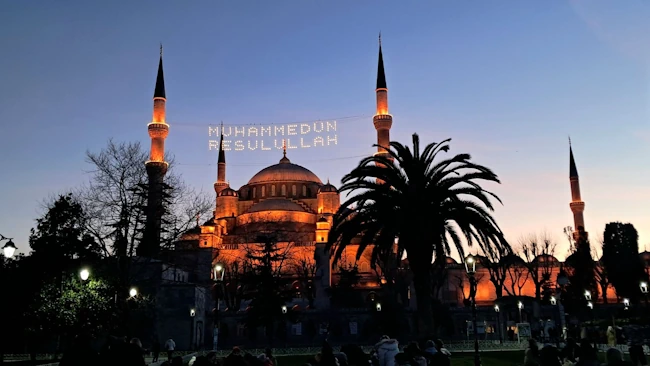
Facing each other across a tree-lined square, the Blue Mosque and Hagia Sophia define the skyline. One rises with six graceful minarets, while the other impresses with a massive central dome.
Just steps away, the Obelisk in Hippodrome recalls chariot races and imperial pageantry, and the shadowy Basilica Cistern hints at underground mysteries.
Then there’s Topkapı Palace, once the gilded heart of the Ottoman court. Its courtyards, pavilions, and treasury rooms offer glimpses into centuries of intrigue, ceremony, and power.

Yes, Sultanahmet is Istanbul’s most tourist-heavy neighborhood. Crowds, camera flashes, and eager restaurant touts are part of the experience. Many eateries trade more on their views than on authentic flavor.
Yet history is never far away. Even if the meal itself isn’t remarkable, it comes with a side of history. Hotels, often tucked into old pasha mansions, echo with stories in their stone arches and quiet courtyards.
Why Visit Sultanahmet?
Nearly every major historical site is within easy walking distance, and while it’s often crowded, the sheer weight of history makes it unforgettable.
Beyazıt
Beyazıt is one of Istanbul’s oldest neighborhoods where centuries of learning, trade, and daily life still hum beneath the surface. It is tucked between Sultanahmet and Laleli, with Çemberlitaş to the west and Eminönü just downhill.
Unlike the postcard beauty and monumental calm of Sultanahmet, Beyazıt thrives on its contrasts. Here, the past grandeur clashes with the raw edges of urban life, making the neighborhood unmistakably real.

At its heart lies the Beyazıt Square, once a stage for imperial ceremonies, student protests, and the daily city grind. Today, it’s a place to watch vendors call out their wares, students spill from university gates, and flocks of pigeons scatter into the air.
The square is anchored by the stately Beyazıt Mosque, whose 16th-century silhouette embodies both spiritual and architectural grace. Just beyond, the gates of Istanbul University open onto echoing courtyards, watched over by the white spire of the Beyazıt Tower.

Commerce thrives in the surrounding streets, most notably in the vast sprawl of the Grand Bazaar. Here, mercantile tradition continues much as it has for centuries – dynamic, noisy, and richly layered.
Just behind it lies the Second-Hand Book Bazaar (Sahaflar Çarşısı). It is a quieter enclave where booksellers sell everything from Ottoman manuscripts to political theory – a haven for readers, collectors, and dreamers.
Why Visit Beyazıt?
Though firmly on the tourist map, Beyazıt hasn’t surrendered to it. Less polished than its neighbors, it watches students, shopkeepers, and commuters weaving past camera-toting visitors. It is the perfect place to see history and modern life collide.
Fener & Balat
What sets Fener and Balat apart is the density of history in an ordinary setting. Fener was once the spiritual and political heart of Istanbul’s Greek Orthodox community and still houses the Ecumenical Patriarchate of Constantinople.
Its skyline is marked by the red-brick grandeur of the Phanar Greek Orthodox College, perched high on a hill, overlooking the Golden Horn.

Steep, narrow, and irregular, the streets remain much as they were in Ottoman times, letting the neighborhood’s layered past sit naturally beside the present.
Right next door, Balat is instantly recognizable for its rows of Ottoman-era houses. Some are freshly painted, while others wear the charming patina of age, with peeling paint and weathered facades that tell a story.

Walking on these streets feels like stepping into a conversation between Istanbul’s layered past and its restless, creative present.
Balat also tells a different story, shaped by centuries of Jewish and Armenian life. Both the Ahrida Synagogue, one of the city’s oldest, and the Surp Hreshdagabed Armenian Church are quiet echoes of a once richly pluralistic community.
Why Visit Fener & Balat?
Here centuries-old façades meet contemporary creativity. Third-wave cafés serve carefully crafted coffee in historic buildings, vintage shops spill onto the narrow alleys, and street art paints crumbling walls. Every corner reveals a new layer of history and a new burst of modern expression. Truly unique!
Samatya
Located by the Marmara Sea, Samatya is a quiet, authentic part of Istanbul. Removed from the main tourist crowds, its narrow streets are home to modest houses, local bakeries, and a genuine sense of community that feels untouched by time.

Once home to Armenian, Greek, and Turkish communities, Samatya still carries echoes of its multicultural past.
The Surp Kevork Armenian Church and the Church of Hagios Georgios stand quietly among the houses, their courtyards shaded by fig trees and steeped in centuries of faith.
Just a few steps away, seaside promenades offer glimpses of daily life. Locals stroll along the water’s edge, fishermen mend their nets, and ferries carve slow paths across the water.

Samatya is also known for its enduring meyhane (tavern) culture. Tables overflow with meze, grilled fish, and rakı. Old songs keep alive a tradition of hospitality that feels untouched by time.
Why Visit Samatya?
Samatya is the perfect spot for travelers who want to step away from the tourist trail and experience a more authentic side of Istanbul. It’s also an ideal base for history lovers, offering easy access to some of the city’s hidden jewels, such as the Yedikule Fortress. Plus, a truly local tavern scene.
Eminönü
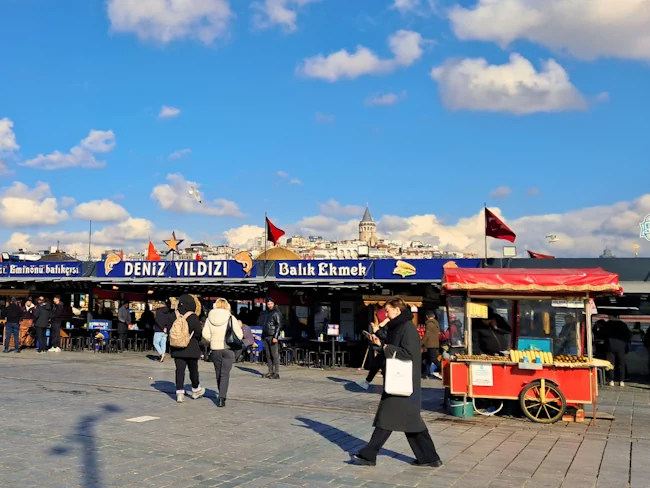
Leaving the busy streets of Karaköy, the Galata Bridge stretches across the Golden Horn to Eminönü. Here, the city’s three great waterways—the Bosphorus, the Golden Horn, and the Sea of Marmara – all come together at a single point.

As expected, it hums with ceaseless energy. Commuters hurry to ferries, vendors call out their wares, tourists shuffle through crowds, and seagulls wheel overhead, all blending into a lively symphony of sights and sounds.
Some find it chaotic – too loud, too crowded – but for those who love a city in motion, Eminönü is pure magic. At the heart of this frentic neighborhood, the New Mosque rises above the crowds, its domes and minarets a striking counterpoint to the chaos below.
A few steps away, the Egyptian Bazaar (Spice Bazaar) draws you in with an intoxicating blend of spices, herbs, teas, and Turkish delight. Even if you buy nothing, the sensory experience lingers.

A short stroll from the bazaar leads to Sirkeci Railway Station. It was the final stop of the legendary Orient Express. Once welcomed travelers from Paris, it now stands as an elegant echo of that romantic era.
Why Visit Eminönü?
Eminönü offers a front-row seat to the city’s daily rhythm, with ferries, street vendors, and historic sights all around. It’s an ideal for food lovers, with its fish sandwich and the Spice Bazaar, and for history lovers, with its landmarks like the New Mosque and the old Sirkeci train station.
Eyüp
Though officially part of the Eyüpsultan district, Eyüp center lies just beyond Fatih’s northern edge and feels like a natural extension of its historical and spiritual landscape.
Following the Golden Horn, Eyüp center comes right after Ayvansaray. It moves at a more contemplative rhythm and invites to slow down, breathe deeply, and glimpse a side of Istanbul where history and faith unfold gently.

At its heart lies the Eyüp Sultan Mosque, one of the city’s most revered sites. Muslims come here not only to pray but also pay respects at the tomb of Abu Ayyub al-Ansari, a close companion of the Prophet Muhammad.
There’s a lot more to Eyüp than just the mosque. It’s a place with laid-back tea gardens, charming old bookstores, and the best smells – roasted nuts and helva – all blending with the call to prayer.
Behind the mosque, a short climb (or cable car ride) leads to Pierre Loti Café, named after the French writer who fell in love with its views. It’s been a long time since then but the panorama over the Golden Horn is still breathtaking.
It’s also the quiet charm of the café itself, with families sipping tea and cypress trees casting shadows over Ottoman cemetery. It is a truly nostalgic scene that feels like stepping into an old photograph.

It is worth mentioning that ferries connect Eyüp to Eminönü and Karaköy. This is a scenic ride along the Golden Horn with rare views of Istanbul from the water.
Along the way, you can hop off to explore gems like Fener and Balat, the Rahmi Koç Museum, or the historic Feshane cultural center.
Why Visit Eyüp?
Eyüp is one of Istanbul’s most sacred sites, making it a must-visit for Muslims and cultural explorers. Beyond the famous mosque, the area holds hidden gems, from tea gardens in historic hans to the breathtaking panoramas of the Golden Horn from Pierre Loti Hill. Here, away from the usual crowds, you can experience a serene and deeply authentic side of Istanbul.
The European Side of Istanbul: Galata, Taksim & Beyond
Taksim
If Istanbul had a heartbeat, it would pound loudest in Taksim. The Taksim Square is more than a traffic hub or tourist stop. It’s a space charged with memory and momentum. Political rallies, New Year’s celebrations, protests, and parades have all unfolded here.

From the Taksim Square, İstiklal Avenue stretches like a living artery. It’s a 1.4 kilometer pedestrian boulevard that rarely rests. Here, Istanbul’s many selves walk side by side.
The pedestrian avenue is lined with embassies, 19th-century apartments, and Parisian-style arcades. These historic buildings are filled with an eclectic mix of international brands, local boutiques, bookstores, and specialty shops, creating a thrilling mix of high-end window shopping and treasure hunting.
It is a shopper’s paradise, yes, but it is also the cultural heartbeat of Istanbul. Independent cinemas, underground theaters, art galleries, and storied institutions like the Atatürk Cultural Center keep the area pulsing with ideas and debate.

By night, the rhythm shifts but never slows. The famous Istiklal Avenue is lined with an overwhelming variety of venues that spill into side streets and hidden passages.
Glasses clink over meze platters, techno thumps from below street level, and late-night conversations echo into morning. Nightlife in Taksim is messy, irresistible, and unmistakably Istanbul – it never lets go.
Why Visit Taksim?
Taksim is one of Istanbul’s most iconic neighborhoods, the symbolic heart where the city’s history, politics, and culture intersect. Anchored by its bustling square and the lively Istiklal Avenue, it offers a mix of grand architecture, street life, cultural landmarks, and nightlife. To visit Taksim is to experience the city’s energy at its most concentrated.
Galata
At the southern end of Istiklal, the streets narrow, the crowds thin, and the city exhales. Welcome to Galata neighborhood where history presses close but a new creative chapet is being written.
This neighborhood was once a bustling Genoese colony. Its medieval past resides in its sloping alleys and weathered stone walls, crowned by the unmistakable silhouette of the Galata Tower.

Built for strategy and surveillance, the tower now watches over a neighborhood that has learned how to evolve without losing itself.
Below the tower’s shadow, the Galata Mawlavi House was once home to whirling dervishes and Sufi mystics. It remains one of the city’s most spiritually charged spaces, inviting reflection where few expect it.
As you descend, the streets grow steeper, narrower, and the city feels older with every step. Then comes a shift unexpectedly. The historic buildings that once echoed with trade have been reclaimed by a new kind of energy.
Cafés, galleries, music shops, and boutiques share the streets with synagogues, mosques, and churches, creating an authentic atmosphere where the old and the new coexist uniquely.

This coexistence is best understood from above. And Galata Tower is not the only vantage point.
From a rooftop, the skyline unfolds, domes and minarets glowing in pale gold. Below, the call to prayer rises; from a nearby bar, a beat answers. For a brief moment they overlap, and the whole neighborhood moves in the same rhythm.
At the foot of the hill, Galata spills into Karaköy, where the Kamondo Stairs curve downward with gentle elegance. A gift from a once-prominent Jewish family, they now stand as a quiet reminder of the elitism woven deep into this neighborhood.
Why Visit Galata?
Galata is where Istanbul’s past and present collide. Cobblestone streets wind past historic towers, churches, mosques, and synagogues, while cafés, galleries, and boutiques bring life to old walls. Every street is full of stories, from whirling dervishes to elite families, making it a neighborhood meant to be felt as much as seen.
Cihangir
Just a short scroll from Taksim, Cihangir is a neighborhood where Istanbul’s intellectual and artistic pulse beats quietly but insistently.
Cherished by writers, academics, and creatives, the neighborhood exudes a relaxed charm that inspires and invites reflection.

The Cihangir Mosque crowns the neighborhood, a historic landmark with sweeping views of the Bosphorus. Designed by Mimar Sinan, it was built in memory of Suleiman the Magnificent’s son, Cihangir, and gives the neighborhood its name.
Nearby, colorful Cihangir stairs invite people to linger, just like Cihangir Park, a favorite perch for locals and students.
Winding streets slip past early 20th-century apartment blocks adorned with subtle Art Nouveau and Art Deco details. At many corners, the same streets reveal watercolor-like views of the Bosphorus.
Antique shops, secondhand bookstores, and corner patisseries break up the lanes. Behind weathered façades, art openings and film screenings unfold in intimate galleries.

Beyond its leafy squares lies Çukurcuma. It is a historic quarter famed for its maze of antique stores and two literary gems; the Orhan Kemal Museum and the Museum of Innocence.
Why Visit Cihangir
Cihangir charms quietly, and that’s precisely its magic. Winding streets pass historic apartment blocks, creating an authentic place to walk. Cafés, antique shops, galleries, and small museums add a creative pulse. There is also history here and popular spots where locals and students gather, making it a place meant to be felt as much as seen.
Tarlabaşı
A five-minute walk from the glitter of İstiklal Avenue, Tarlabaşı feels like another world. Here, a different kind of Istanbul lives in crumbling 19th-century facades, laundry strung across narrow alleys, and the echoes of a vanishing multicultural past.

Established in the late Ottoman era, Tarlabaşı once thrived as an artistic quarter of Pera—the Ottoman name for Beyoğlu. Today, the ornate balconies and high ceilings hint at lost grandeur.
Not the elite splendor of the nearby Grand Rue de Pera (today’s İstiklal Avenue). The houses here mirrored those of the grand boulevard, but in smaller, humbler form. They were built for petite bourgeoisie of craftsmen and workshop owners.
But decades of migration, poverty, and neglect reshaped its identity. From the very beginning, it had been a place for Istanbul’s newcomers, mostly the poor who arrived in search of opportunity. By the 1980s, it became a haven for Kurdish families fleeing conflict, Romani musicians, and African migrants – each adding new layers to its streets.

Today, gentrification is rewriting Tarlabaşı’s skyline, but its heartbeat persists. Sundays still belong to the chaotic symphony of the open-air market. Romani brides in sequined gowns still glide past the Surp Hovhan Church. For now, the neighborhood’s defiance hangs stubbornly in the air.
Why Visit Tarlabaşı?
Tarlabaşı resists tourist checklists, but for those seeking Istanbul beyond postcards, its raw stories are essential to witness.
Nişantaşı
Just a short stroll from Taksim Square, Nişantaşı exudes understated style and timeless elegance. Conceived in the late Ottoman period as a modern residential quarter, it has never lost its aura of prestige.

Its gridded streets are lined with graceful 19th-century apartment blocks, adorned with wrought-iron balconies and delicate Art Nouveau details—a quiet reminder of Istanbul’s more refined past.
Here, old-money locals mingle with designers, students, and café regulars, all moving through streets that radiate cosmopolitan ease.
At the neighborhood’s heart, Abdi İpekçi Street shines with refined charm. International luxury brands sit alongside Turkey’s top designers, while visitors move between boutiques and candlelit pâtisseries, soaking in stylish rhythm that feels uniquely Nişantaşı.

But Nişantaşı’s charm isn’t all high-gloss. Around the corner, Reasürans Passage offers a curated calm with niche galleries and tucked-away ateliers, and Atiye Street hums gently with cafés and laid-back nightlife.
Along these stylish streets, restaurants serve refined Turkish and international fare, and intimate bistros offer the perfect backdrop for unhurried lunches.
Why Visit Nişantaşı?
Elegant streets house contemporary galleries, boutiques, and intimate cafés. Local designers share space with international labels, while hidden ateliers offer quiet discoveries. Refined bistros and specialty shops add texture to every turn. Nişantaşı presents a lifestyle that’s elegant, effortless, and truly Istanbul.
Karaköy
Where Galata slopes toward the sea, Karaköy stretches along the Bosphorus – a former maritime hub where ships from every corner of the world once moored, and merchants exchanged goods, languages, and stories. Trade and finance pulsed through its streets, shaping a neighborhood built on movement.
Here, multiculturalism was the city’s operating system. Karaköy was once said to be the most bilingual neighborhood in the empire, its streets alive with Ladino, Armenian, Greek, French, and Turkish flowing into one another without pause.

That layered history still lingers in the shadows: the quiet geometry of the Ashkenazi Synagogue, the Gothic arches of Arap Camii – once a Dominican church -, and Greek inscriptions half-swallowed by plaster and time. In Karaköy, history doesn’t stand tall; it murmurs from worn stone and fading paint.
Today, the neighborhood leans into both grit and gloss. Bank buildings house galleries; old warehouses roast third-wave coffee. A design boutique might sit next to a fishmonger or tire shop.
Still, Karaköy moves. Ferries dock by the minute, and the T1 tram rings past. The Galata Bridge funnels a city’s worth of motion between Istanbul’s past and its present. And yet – there’s space to pause.

If you’re just passing through, let the pace catch you off guard. Give it forty-five minutes, and Karaköy might surprise you. Or follow the water north into Tophane, where baroque mosques, late Ottoman façades, and the clean lines of Istanbul Modern all share the same blue light.
Tophane
Once the heart of Ottoman artillery production, Tophane has evolved into one of Istanbul’s most intriguing cultural crossroads. Its name “gunhouse” still echoes with history, but today, the only blasts come from bold ideas.
At its center, the Tophane-i Amire – once a 15th-century foundry – houses contemporary art beneath vaulted stone. A short walk away, Istanbul Modern and Galataport rises by the Bosphorus, their glass walls reflecting a city in flux.

Between them, the Kılıç Ali Paşa Complex – designed by Mimar Sinan – stands serene. Its hammam still steams beneath domes that remember empires. Across the street, the baroque Tophane Fountain once offered water to travelers; now it catches sunlight and camera lenses alike.

Climb the nearby hill and you’ll reach Sanatkârlar Parkı, a quiet terrace of green that offers a view few cities can match. On a clear day, the skyline unfurls like a scroll: Topkapı Palace, Hagia Sophia, the Blue Mosque – all held in a single frame. The park feels less like a destination and more like a well-kept secret.
But Tophane’s spirit isn’t all stone and symmetry. It lingers in side streets, where metalworkers and galleries share walls, and cardamom coffee drifts from shaded doorways. By night, locals gather in nargile cafés under soft lamplight, drawn by a sea breeze that never quite leaves.
Beşiktaş Center
Follow the Bosphorus northeast from Tophane and you arrive in Beşiktaş, where imperial ghosts and modern life collide at full speed. Dolmabahçe Palace and Yıldız Palace still cast long shadows – grand reminders of an empire’s final flourish. Just beyond their gates, Beşiktaş sheds its royal past for something far more kinetic.
At the center is the market: a tight-knit grid of cobblestone streets where trendy cafés spill into alleys, bars hum beside bakeries, and shop signs tilt at odd angles over stalls selling figs, football scarves, and phone chargers. Everything is layered, improvised, a little chaotic.

On Çelebi Oğlu Street – nicknamed Kahvaltıcılar Sokağı, “Breakfast Street” – the day begins with ritual. Nearly twenty spots serve flaky börek, briny cheeses, kaymak drowning in honey, and endless glasses of çay. No one’s in a rush: This is breakfast as social architecture.

By afternoon, the market finds its rhythm: vendors restock, students argue over textbooks and simit, shopkeepers trade gossip and jokes. But come match day, the gears shift. Calm gives way to waves of black-and-white scarves. The roar from Vodafone Park rolls in like thunder, and every street corner becomes an extension of the stadium – loud, raw, alive with chant and charge.
Ortaköy
From Beşiktaş center, a short drive or scenic stroll along the Bosphorus leads to Ortaköy – a neighborhood where history, daily rhythm, and tourism blend with surprising grace.
Once a multicultural village, Ortaköy still carries the imprint of coexistence. A mosque, a synagogue, and a church stand within minutes of each other – quiet witnesses to centuries of shared life.

Down by the waterfront, the Ortaköy Mosque – framed by the soaring arc of the Bosphorus Bridge – offers one of Istanbul’s most iconic vistas. At sunset, when the sky turns soft and the water glows, it draws photographers and flâneurs alike.
Step away from the postcard and the mood shifts. Side streets reveal something more intimate: small galleries, indie boutiques, and cafés tucked beneath ivy-covered facades or perched on breezy rooftops. Some are just two stools and a strong cup of coffee; others hum with clinking glasses and unhurried conversation.
On weekends, cobblestones fill with makeshift markets, trading in handmade jewelry, artwork, and crafts. This is where souvenirs come with stories.
And then there’s kumpir – Ortaköy’s signature indulgence. Vendors near the square shout out their offerings, each one trying to tempt. It’s not fine dining – it’s messy, satisfying, and unashamedly fun. Locals love it just as much as visitors do.
The Asian Side of Istanbul
Üsküdar
Across the Bosphorus from Istanbul’s bustling European side, Üsküdar moves to a slower, more spiritual rhythm – a lived-in Istanbul of seafront mosques, ferry horns, and golden sunsets softening the skyline.

Just offshore, the Maiden’s Tower rises from a tiny islet, poised between myth and sea light. Beloved by poets, painters, and anyone with a lens, it remains one of the city’s most cinematic silhouettes.
Step inland, and Ottoman elegance begins to weave into daily life. The Mihrimah Sultan Mosque – built for Süleyman the Magnificent’s daughter – rises with graceful strength. A short walk away, the modest Şemsi Paşa Mosque seems to float at the water’s edge, another masterpiece by the great Sinan.

Scattered between these landmarks are age-old hamams, stone fountains, and former Sufi lodges where ilahi (devotional song) once echoed through candlelit halls. In their silence today, you can still sense the reverberations of ritual and poetry.
Üsküdar does not hurry. Mornings bring ferry crossings and market chatter; evenings stretch into long conversations along the waterfront. Locals stroll at dusk, roasted chestnuts in hand, as tea glasses warm their fingers. There’s no performance here – just people living not to be seen, but simply to be.
Kuzguncuk
A short ride from Üsküdar, Kuzguncuk hugs the Bosphorus with a quiet confidence. Once one of Istanbul’s most harmonious enclaves, it still feels like a village tucked inside the city.
For centuries, Jewish, Greek, Armenian, and Turkish communities lived side by side here. You’ll still find a synagogue, an Orthodox church, and a mosque within a few paces – each quietly woven into the neighborhood’s fabric.

Wander its narrow streets and you’ll pass 19th-century wooden houses with peeling paint and flower-filled balconies. Local galleries, bookstores, and bakeries line the lanes, inviting you to slow down. Some cafés are no more than two stools and a strong cup of coffee; others hum with conversation beneath ivy-covered facades.

On weekends, the streets fill with stalls offering handmade jewelry, ceramics, and crafts, while children play on the sidewalks, and neighbors stop to chat.
Kuzguncuk isn’t showy, and that’s part of its appeal. It offers something simple and rare: a neighborhood that still feels like a neighborhood.
Kadıköy & Moda
On Istanbul’s Asian shore, Kadıköy moves to a rhythm all its own – firmly part of the city, yet unmistakably different. Here, ferry docks don’t just deliver commuters; they spill people into streets alive with scent: fried mussels, roasted coffee, salty sea air. It’s where old-timers sell olives in the market, while students read poetry over flat whites.

At the heart of Kadıköy, the fish market buzzes beside meyhanes, record stores, and secondhand bookshops stacked to the ceiling. Murals bloom on side streets and faded slogans still whisper from walls. The conversations are loud, opinionated, and always alive. This isn’t the Istanbul of postcards — it’s the one locals claim.

Walk ten minutes and you arrive in Moda – a place less about arrival than lingering. Under fig trees and wisterias, couples read on park benches, children run the promenade, and cats sun themselves on crumbling balconies.
Time stretches here. People sip tea on the seawall, listen to street musicians play slow ballads, and picnic at sunset. Whether it’s sahlep in winter or island views in the summer haze, Moda offers something rare: space to breathe, to watch the light shift, to remember that Istanbul’s magic lives not just in spectacle, but in stillness.

Leave a Reply