The Biennial 2025 peels back the layers of the city. It pulls you from the public theater of Istanbul streets into the private worlds of buildings; factory floors, warehouse vaults, and abandoned offices.
This guide follows that journey, showing how each space – from Karaköy’s historic corners to the heart of Istiklal Avenue – becomes an essential part of the experience.
The Cluster: Four Venues Within A Breath
The Biennial begins almost like a pocket map folded into Karaköy: Galeri 77, Muradiye Han, Cone Factory, and Zihni Han. Except for Zihni Han, they’re all small in scale, within minutes of each other, and easy to slip in and out of.


Zihni Han is the standout; not just for the works inside but for its vantage point beside Istanbul Modern, where city and sea frame art.
From its top-floor terrace, one of the city’s most beautiful views unfolds: The Bosphorus, the historic skyline, and the art itself are framed together.


The other three (Galeri 77, Muradiye Han, Cone Factory) feel more intimate. They are like side notes that enrich the rhythm of the walk. Yet, even these smaller venues can keep you longer than expected, whether through screenings or works so compelling they invite lingering.
Galata Greek School: A Show Of Its Own


Cross Meclis-i Mebusan Avenue and suddenly you’re at Galata Greek School, one of the Biennial’s major anchors. (Not so sudden by the way – crossing here takes a moment). It’s not a “quick stop”. You need time here for the installations, as well as for the school itself, which is part of the show.
Meclis-i Mebusan 35
After Galata Greek School, follow Kemankeş Avenue (then becomes Meclis-i Mebusan Avenue). The walk takes about 8–10 minutes. On the other side of the avenue, landmarks such as Tophane Fountain, Kılıç Ali Pasha Mosque, and Galataport accompany your walk.


Meclis-i Mebusan 35 is a small venue, but it offers a thoughtfully curated experience. Exploring it may take around 25–30 minutes.
Garden Of The Former French Orphanage
At one point along Meclis-i Mebusan Avenue, Boğazkesen Avenue branches upward. Take this slope and within about 10 minutes you’ll reach the Garden of the Former French Orphanage.


It is a sudden shift from the urban rhythm of Karaköy to something quieter, almost secret. A small café nestled within the garden invites you to pause with a tea or coffee, making the space feel less like a venue and more like a discovered retreat.
This reflective atmosphere frames Khalil Rabah’s Red Navigapparate, allowing its commentary on the politics of land to resonate more deeply.

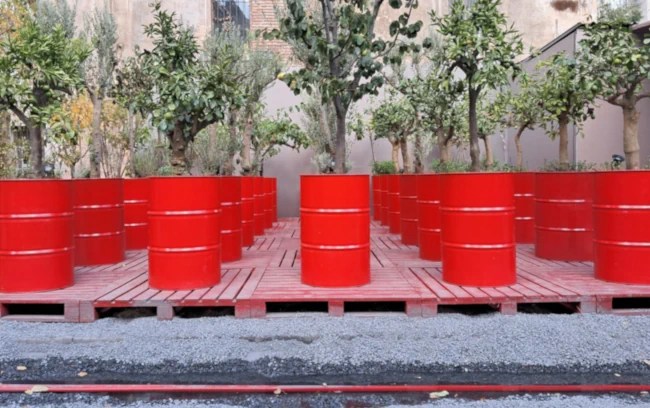
The climb itself matters. It draws one into Çukurcuma, a neighborhood of antique shops, crooked lanes, and hidden courtyards. Two minutes beyond the garden lies Orhan Pamuk’s Museum of Innocence. It is a subtle reminder that here, art and story are inseparable.
El Hamra Passage: Back To The Buzz
A final ten-minute walk from the Garden of the Former French Orphanage leads to El Hamra Passage on Istiklal Avenue.


The change is striking from the calm of Cihangir to one of Istanbul’s busiest arteries. Voices, footsteps, shopfronts, and the restless flow of people blend with the Biennial’s own rhythm.
This is the only venue where waiting in line can be part of the experience. Crowds, heat, and poor ventilation make it impossible to experience the works here as in other spaces. It tests patience as much as curiosity.
Time & Pacing: One Day Isn’t Enough
Yes, this Biennial is walkable, and that’s the beauty of this edition. But don’t mistake short distances for a quick visit.
The Biennial’s true rhythm is dictated by its screenings, some of which are fleeting moments, while others require a dedicated half-hour or more in a chair.


A single day feels rushed, obscuring the Biennial’s underlying tempo. To truly absorb it, a second visit is essential. This allows the pace to change, previously missed works to be revealed, and the city itself to feel new each time.
To do it justice, plan for two days:
- Day One: The Karaköy cluster and Galata Greek School
- Day Two: Meclis-i Mebusan 35 → Former French Orphanage → El Hamra Passage
Practical Notes
- Entry: Free, calm, and no crowds – except El Hamra Passage
- Hours: Closes at 6 pm – frustrating for a city that lives after dark.
- Shoes: Walking shoes are essential – Karaköy is cobblestones and slopes.
- Photos: Zihni Han’s view is unmissable.
Works That Stayed With Me
At least one work will hold you, no matter your pace. For me:
- THAIS (Birth of Paradise) – Rafik Greiss
- You May Own the Lanterns but We Have the Light – Haig Aivazian
- The Cannibal Paradox: Artificial Womb Project Headquarters – Mona Marzouk

Leave a Reply