
At first glance, döner seems deceptively simple: meat turning on a vertical spit, sliced, wrapped, and served to go. On the streets of Istanbul, this spinning spectacle is a daily part of the city’s food scene.
Behind the scenes, however, lies a sophisticated world of culinary science. Döner production is among the most technically demanding forms of meat preparation. Achieving the perfect result requires a precise balance of meat selection, fat distribution, marination chemistry, and controlled heat dynamics.
This article peels back the layers — literally and figuratively — to reveal the science, skill, and heritage behind Istanbul’s döner, showing why this iconic street food is much more than it appears.
Döner vs Kebab: Understanding the Difference


The word döner comes from the Turkish verb dönmek, meaning “to turn.” And that’s exactly what it does: meat slowly turning on a vertical spit, cooked evenly and kept perfectly juicy.
Though small regional variations exist – like yaprak döner in Bursa or sucuk döner in the Black Sea region – the essence of döner hardly changes. Wherever you go in Turkey, it’s instantly recognizable: vertical, rotating, and filling the air with its savory aroma.
Kebab (kebap), on the other hand, is the broader family name. It likely comes from Persian and Arabic, and in all languages, it simply refers to meat cooked over fire.
Every corner of Turkey puts its own stamp on it: Adana kebabı with its fiery spice, Urfa kebabı with its gentler tone, tandır kebabı slow-roasted, or orman kebabı simmered in a pot. Döner is just one member of this larger, flavorful family.
How Döner Is Made
Now that we’re clear on what döner is, it’s time to see how it comes together. Selecting the right cuts, balancing the fat, and layering with precision, each step is a calculated move. This is the art of döner, and we’ll humbly explore it.
Meat Selection: The Anatomical Foundation
Döner can be made from a variety of meats — beef, lamb, goat, chicken, and even fish. Each brings its own personality. For red meats, the preferred cuts come from the rump, shoulder, back, or waist, chosen for their ideal muscle-to-fat ratio.
Fat is crucial, typically added as tail fat or thinly sliced fatty layers to keep the meat juicy. Poultry döner sometimes includes skin for the same reason. The slices of döner measure about 4–6 millimeters thick. For minced versions, the meat is ground to 3–6 millimeters.
Marination: The Science of Flavor and Tenderness
Marination does both tenderizing and flavoring. Meat marinates for 8–24 hours at around 4°C. Acidic agents — yogurt, vinegar, lemon juice — break down muscle fibers. Enzymes from fresh onion and garlic tenderize further. Spices like cumin, paprika, oregano, and black pepper add regional flair.
Stacking the Spit: Vertical Layering Precision

Marinated meat is hand-stacked onto a vertical spit, usually 80–120 cm tall, 20–35 cm in diameter. This is no random pile. Large, flat slices stabilize the base and top. Fatty and lean slices are layered to keep the meat juicy. The next step is compressing to remove any air pockets. Some artisans tuck tomato or bread slices at the base to catch drippings and prevent overburn.
Cooking Dynamics: Heat Meets Rotation
Döner ocağı (vertical grill) typically runs on gas. Some artisans still swear by charcoal or wood for smoky depth. Outer layers reach 300–400°C. Inside, temperatures stay below 60°C until slicing. Rotation speed — 2–4 turns per minute — is carefully tuned. This creates a crust rich in umami.
Slicing and Serving
Slicing follows the muscle grain. Long knives or mechanical cutters produce thin ribbons with crispy edges and juicy interiors. Precision here preserves texture and delivers the full döner experience.
Handmade Döner vs. Factory Döner
Döner’s history in Turkish food culture is long and rich: it began as an artisanal tradition, layered by hand, cooked over flame, and sliced as needed. Yet, like everything touched by mass demand, it now has an industrial counterpart.
The Art of Handmade Döner

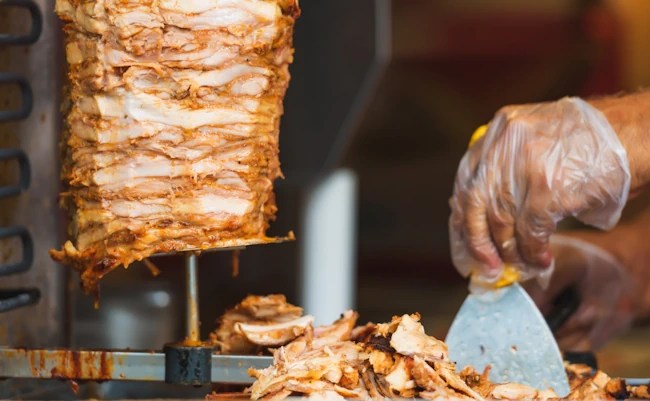
Traditional döner is built on careful craftsmanship. Each layer is hand-cut, marinated with perishable ingredients, and stacked with precision. Fat is added strategically rather than injected, and marination is allowed to infuse slowly.
Low-throughput production keeps supply chains short and ingredients fresh. Meat is cut, marinated, and stacked to order, preserving texture and flavor without preservatives, phosphates, or artificial binders. The grain, fat pockets, and protein fibers remain intact — a texture and craftsmanship that define truly traditional döner.
Yet artisanal döner, for all its authenticity, is increasingly niche. It demands time, labor, and high-quality raw materials, making it scarce, costly, and often confined to specific neighborhoods. Once a humble street food, authentic döner has become a curated luxury for those with time and disposable income.
The Factory Döner

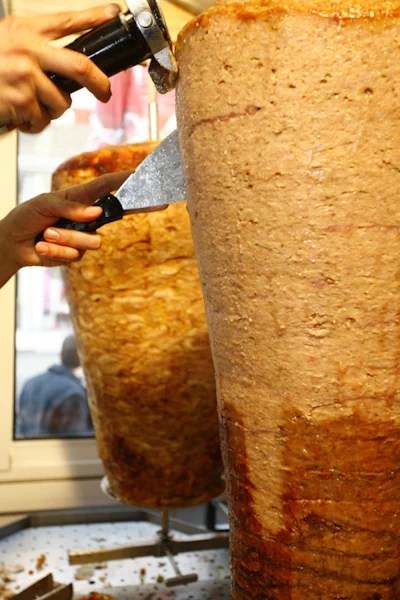
Industrial döner production prioritizes scale and profit. Meat is ground and mixed with textured vegetable proteins (TVPs), modified starches, phosphates, and emulsifiers. These additives retain moisture, extend shelf life, and produce a uniform texture, but at the cost of nutrition and digestibility.
Freezing, grinding, and chemical binding further flatten the meat, removing the layered juiciness and aroma of traditional döner.
Animals are treated as raw material in an optimized system and often given antibiotics or hormones instead of space, care, and time. These shortcuts leave their mark on the meat, affecting both its quality and every bite we consume.
Industrial döner is cheap and practical, but in that bargain, it sacrifices more than flavor. It erases tradition, undermines quality, and raises serious health concerns, from excess sodium and preservatives to the hidden effects of antibiotics and hormones.
How to Identify Authentic Döner: Tips and Tricks
In a world where convenience often sacrifices quality, knowing the difference is more than preference; it keeps tradition alive. Recognizing real döner requires sensory awareness and a touch of critical thinking. Here’s how to read the skewer like an expert.
- Look at the Layers
Authentic döner is visibly layered. You should see distinct grain, muscle fibers, and fat marbling. A uniform texture, color, and shape? That’s often a sign of restructured meat paste. Watch for unnatural seams or overly smooth surfaces, as these are clues that the meat was extruded rather than hand‑sliced.
- Follow the Scent
Real döner gives off the warm scent of rendered fat, a caramelized crust, and earthy spices. A sour or overly sharp smell is often a giveaway of synthetic flavorings or industrial spice mixes.
- Watch the Knife
Is the döner sliced fresh to order? Authentic vendors slice only when needed, revealing crisp, just-cooked crusts. If it’s pre-sliced and sitting under heat for a long time, walk away.
- Taste the Structure
Artisan döner has a distinct bite. You notice the grain of the meat, the contrast between crisp crust and tender layers, and a depth of flavor. Industrial döner, by contrast, often lacks texture, dissolving too easily into a uniform blandness. If every bite tastes the same, that’s standardization.
- Read the Surroundings
Watch the turnover. A large, well-worn spit turning steadily signals freshness. A small, untouched stack drying in place tells another story. Homemade sauces, fresh bread, and crisp onions complete the experience. Real döner lies in these details.



Leave a Reply